
Whitepaper
Networked trains require a common data language. This white paper shows why a standardised vehicle data set is a key building block for efficient maintenance, digital processes and sector-wide interoperability. Siemens Mobility, Knorr-Bremse and Deutsche Bahn describe an initial proposal to serve as a basis for Europe-wide standardisation and invite the sector to continue along this path together.
Standardised vehicle data as the key to the networked rail sector.
As a rail sector, we are facing a groundbreaking transformation: the standardisation of vehicle data is the key to networked, efficient and future-proof European rail transport.
By manufacturers, operators and suppliers joining forces, we are creating a common database that promotes innovation, efficiency and sustainability. We invite all industry partners to actively participate and jointly shape best practices - for a railway sector that sets standards and inspires.
Together, we face the challenge of making the rail sector fit for the future through best-practice approaches, data harmonisation and cross-sector collaboration. The standardisation of vehicle data is the key to a networked and efficient rail sector.
Standardised data formats and comprehensible content reduce interface problems, accelerate the integration of new vehicles and simplify the use of data along the entire data value chain. We are thus increasing the competitiveness of the rail system compared to other forms of mobility and are doing pioneering work for the urgently needed harmonisation in the rail sector.
Our initiative is far more than just an IT project - it is a strategic necessity in order to master complexity, increase efficiency and ensure the ability to innovate in the long term. The EU Data Act serves as a catalyst for the cross-value-added use of data and enables fair access for users and owners of networked products. Sector-specific standardisation along the entire data flow is central to this.
Together with the sector, we are developing principles and guidelines for connected trains, because only a talking train that provides its data in a standardised way forms the basis for the transparent and fair use of data for the entire value chain. Our guiding principle is to achieve a standardised vehicle data set as the basis for digital transformation and increased efficiency.
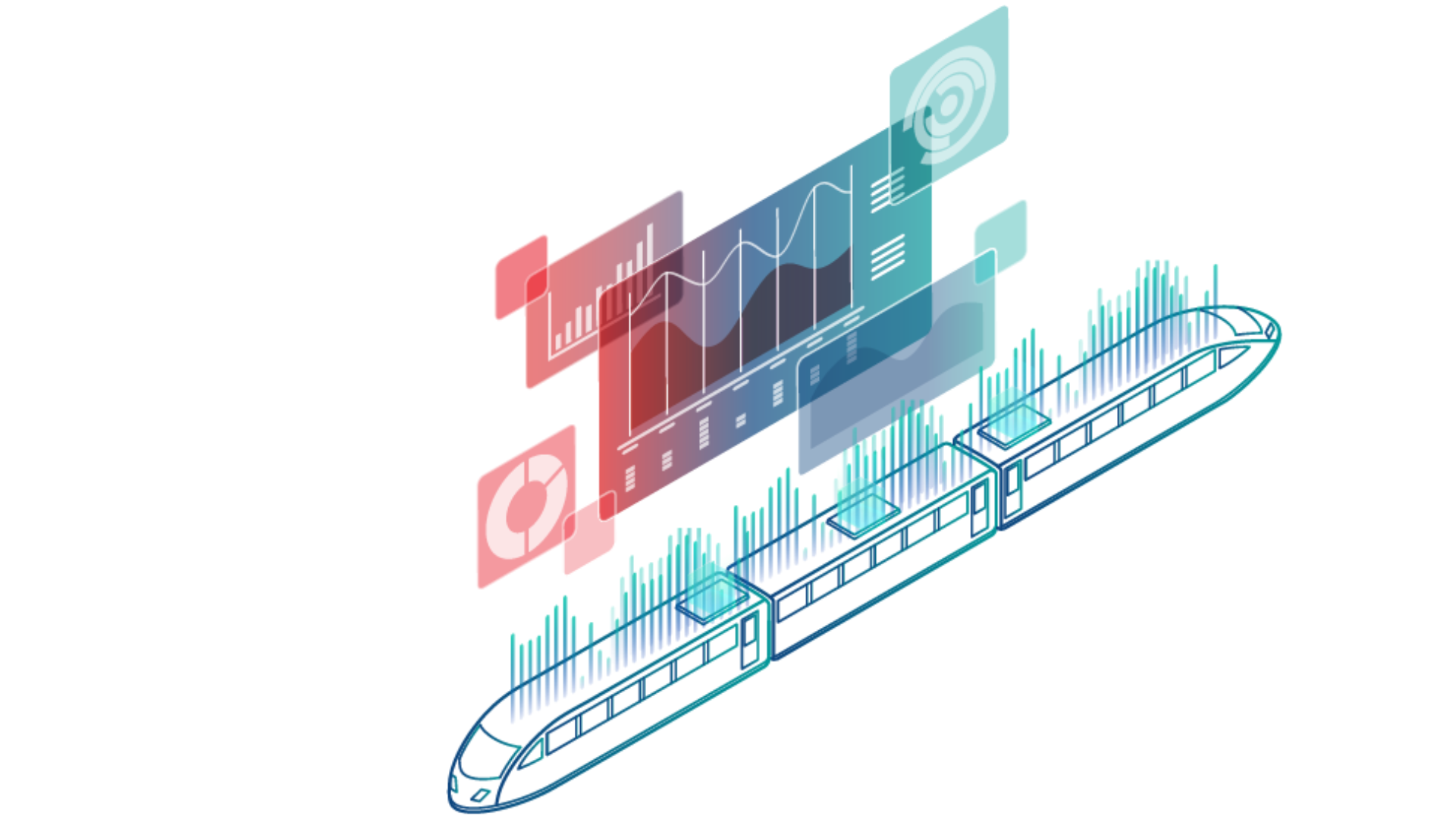
A fragmented data landscape hinders progress in rail transport.
In the rail sector, the use of technical vehicle data is essential for efficiency, safety and digital innovation. Reality shows that the data is there - but it doesn't speak the same language. Different formats, structures and proprietary systems hinder efficient utilisation where it is needed. The result: complex integration projects, high operating costs and innovation backlogs.
System breaks & data islands
Every new vehicle fleet creates new interfaces, media disruptions and translation logic - real integration projects. Instead of continuous data flows, local silos are created with manual effort.
Heterogeneous data structures
Existing fleets usually provide data in their own formats and generally only what was specified by the owner of the vehicles. Components, vehicles and manufacturers each use their own data models - a standardised exchange and the use of uniform analytical models is hardly possible.
Lost potential due to lack of standardisation
Without a common semantic and structural basis, data-based applications such as condition-based maintenance, AI-supported optimisation or automated inspection processes remain limited to individual cases.
Regulatory pressure & new framework conditions
The EU Data Act creates a binding framework for data access and use. Standardisation is no longer an option, instead it is becoming a prerequisite for market participation and efficient collaboration in the sector.
Standardised data and open interfaces are providing a firm foundation for data-driven maintenance processes.
Elmar Zeiler – CEO Siemens Mobility Customer Service

With open ecosystems and standardised data, we are jointly turning many data silos into an interoperable ecosystem - from the subsystem to the operator.
Matthäus Englbrecht – Chief Technology Officer (CTO) Knorr-Bremse Rail
Data standards are much more than an IT project, they are a business lever that can significantly reduce the life cycle costs of a vehicle.
Cord Gatzka – Head of Railway Technology & Analytics
The talking train - Vision and benefits of standardised vehicle data.
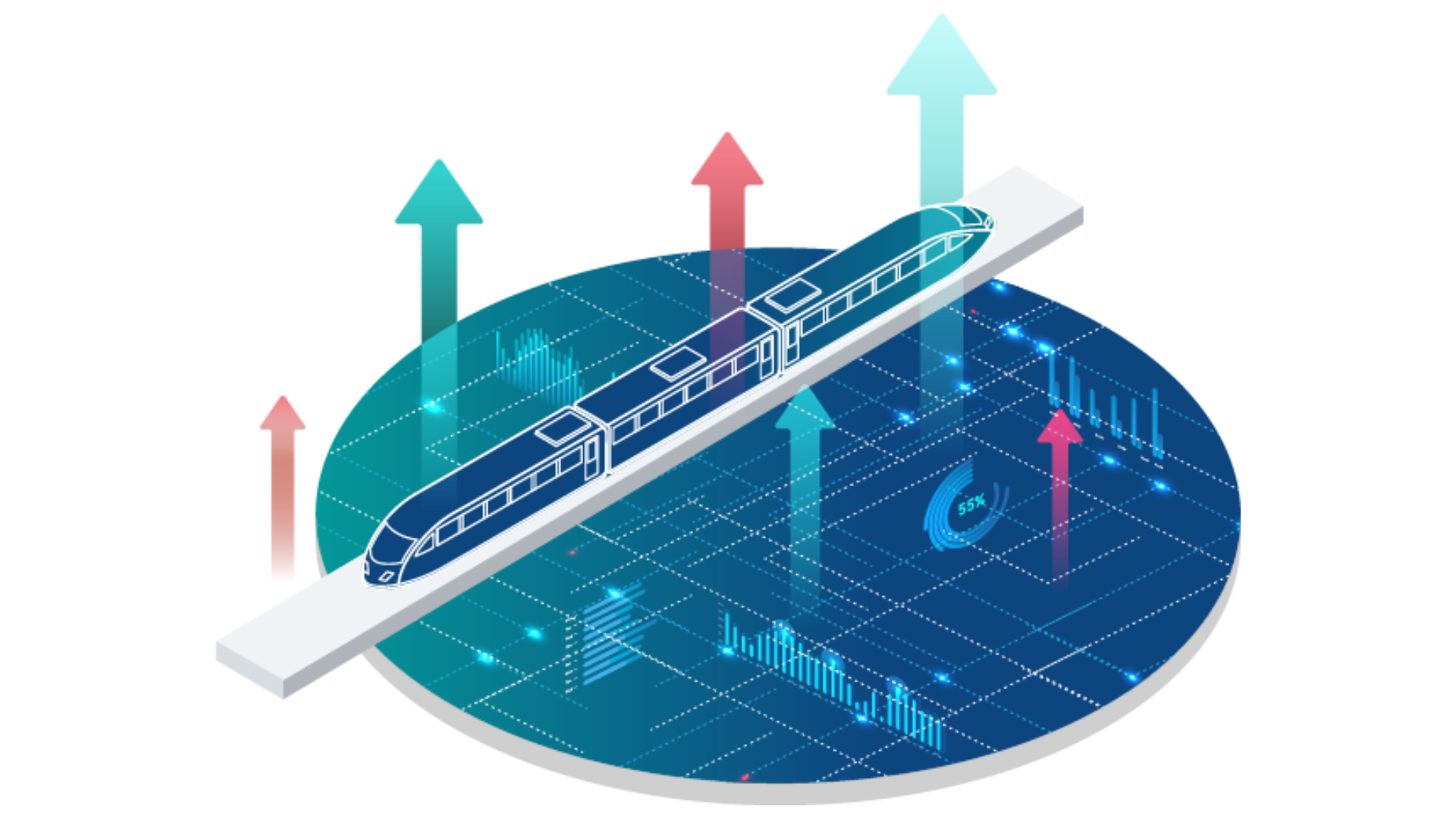
Standardised vehicle data are the key to an interoperable digital rail system. The vision: a train that knows its condition, provides relevant data in a structured way and thus enables end-to-end digital processes - from diagnostics to predictive maintenance. We call it the Connected Train.
Automated processes & predictive maintenance
Standardised data formats enable the automated processing of technical information - for instance, work orders, status reports or spare parts requirements. This reduces manual diagnostics and speeds up maintenance cycles.
Efficiency through clear data structures and semantics
Instead of individual data extraction, comprehensible, structured data records are created immediately, which can be transferred directly to ERP, asset or maintenance systems - standardised, scalable, maintainable. And, depending on the application, for all partners at the same time.
Basis for Al-supported optimisation
Structured and reliably recorded data are a precondition for reliable modelling. The standard lays the foundation for data-driven optimisation in fields such as operation, energy consumption or service life forecasts.
Support for regulatory requirements
A shared vehicle data set helps to fulfil new legal requirements such as the digital product passport or CO2 balances (product carbon footprint).
Advantages
- No proprietary translations necessary
- Automation of manual processes possible
- Consistent data across boundaries between manufacturers
- Basis for learning systems and AI models
- Faster and more cost-efficient
Data-based maintenance - how standardised vehicle data en-ables condition-based maintenance.
Condition-Based Maintenance is an example of how structured vehicle data work along the entire value chain: From data acquisition in the component via the vehicle level to automated further processing by the operator
- 1. Component event recognition
A subsystem - for example, an entry door - detects an irregularity (such as delayed opening of a door) and generates standardised data records that are clearly described in terms of time, context and semantics.
- 2. Structured data flow across the vehicle
The vehicle system transmits the event in a standardised format - without an conversion losses or proprietary interfaces.
- 3. Operators and maintenance engineers receive usable information
In the railway operator's maintenance system, the event can be processed automatically: as a recommended action, a work order, or a monitoring trigger.
- 4. Avoidance of unplanned downtime
Early, structured detection of technical anomalies enables the railway operator to react in a targeted manner - for instance by replacing components before failure or adjusting maintenance intervals.
A shared vehicle data set - three perspectives, one goal.
The basis of the standard is a standardised signal list - a structured, cross-system vehicle data set. It is defined in such a way that it takes into account the needs of operators, vehicle manufacturers and component manufacturers. This creates a common language across company boundaries and different vehicle classes.
- 1. Perspectives of the operator and the main-tenance company (railway operator): These require information on operational availability, for planned maintenance and for integration into internal systems (such as asset management, ERP).
Focus: Clarity, relevance, direct usability
- 2. Perspective of the component manufacturer (Tier-1): Supply raw data from subsystems (such as doors, brakes), ideally already pre-processed.
Focus: Contextual categorisation, functional description, depth of diagnosis
- 3. Perspective of the vehicle manufacturer (OEM):
Ensure aggregation and forwarding of signals at vehicle level.
Focus: Standardisation without dulica-tion of effort, connectivity to vehicle architecture
The signal list is designed as a first draft for further development within the sector:
- Can be expanded to include instances of further uses, components and vehicle types
- Joint further development in an open committee
- Goal: lean, scalable baseline without any rigid data framework
Strategy for compatibility:
- No duplicate structures, but rather compati-bility with existing standards
- Terminological & semantic compatibility with existing classifications
- Involvement of potential standardisation partners in further development
European connectivity - Orientation towards existing bodies and initiatives
A technical standard will be effective only if it is compatible with existing bodies and standards, regulatory requirements and sector-wide developments. This initiative is therefore explicitly orientated towards the existing European frame-work and actively seeks to connect with relevant structures.
EU Data Act
Creates a standardised legal framework for the distribution and use of machine-generated data. The planned vehicle data standard directly addresses the requirements for data accessibility and interoper-ability formulated therein.
lnternationally connectible
The aim of the approach is to build on existing cross-industry standards and proven modelling principles, rather than developing any new parallel or proprietary solutions. The vehicle data standard is expressly intended to achieve integration of existing concepts and not to create a new design. For this reason, developments and results relating to the product passport will also be included.
The specific design and final specifications are to be made in the relevant national and international standardisation committees. This ensures that the results are sustainable in the long term, internationally compatible and compatible beyond the railway sector.
Europes Rail Joint Undertaking (ERJU)
European-funded innovation partnerships and the structural scaling of common standards take place within the ERJU. Relevant national and international standardisation bodies can be specifically addressed and integrated into further development via established processes. This requires the inclusion of requirements for vehicle data standards.
In addition, a sector-wide data space is being designed within the framework of the ERJU and incorporating the Gaia-X principles. The vehicle data standard represents an important technical base layer for incorporating structured data into such higher-level data spaces.
Help shape it now - the next step towards a common data language.
The railway industry is at a turning point. Siemens Mobility, Knorr-Bremse and Deutsche Bahn have set the ball rolling with their initial proposal for a standardised vehicle data set. In order for the standard to become sustainable, widely accepted and compatible at European level, the active involvement of other stakeholders is now required.
What happens next?
Further developments will be achieved through dialogue: The signal list is being expanded in cooperation with other partners and extended to new systems and other use cases.
Integration into existing structures: The aim is to coordinate and integrate with relevant bodies, such as European Rail and others.
Prepare practical applications: Reference projects, pilot applications and integration into procurement processes are concrete next steps.
Jonas Podszuweit (Deutsche Bahn AG), Marco Langwadt (Knorr-Bremse Systeme für Schienenfahrzeuge GmbH), Franz Winterauer (Siemens Mobility GmbH)
Advantages of participation:
- Freedom of design for further development
- Early access to a structured standard
- Connectivity to regulatory developments (such as the EU Data Act, digital product passport)
- Reduction of integration effort and interface complexity
Direct contact

Read the whitepaper as a PDF now!
Whitepaper Connected Trains