
As well as the noise produced by trains in motion, peak emissions by train subsystems contribute to trackside noise pollution. Now a new platform featuring climate-friendly, eco-compatible energy and noise emission management is making the world’s most eco-friendly mode of transportation even greener.
We already know that the noise of steel on steel generated by moving trains weighing hundreds of tons is not insignificant. It is also true that direct soundproofing of individual vehicle components, backed up by acoustic barriers and new types of friction materials for “whisper brakes”, has reduced trackside noise pollution. But because the rail noise of trains in motion usually dominates their other noise emissions, people tend not to notice even relatively loud subsystems such as the compressors in the multiple air supply systems aboard every train. These compressors supply the compressed air needed for essential train functions such as brakes, pneumatic suspension, sanitary facilities, pantographs, sanding systems and air horns.
The situation changes when a train is no longer in motion. Noises that were barely noticeable while the train was moving – such as those produced by compressors whenever they power up – suddenly become much more noticeable and disruptive once the train is stationary. The same is true of daily shunting operations, or of the overnight preparation of parked rail vehicles for an early-morning start. But now, a totally new kind of next-generation air supply system, with new features, is audibly improving all these scenarios. Knorr-Bremse has also successfully optimized the system’s hardware using state-of-the-art simulation techniques. AirSupply Smart’s combination of new functionality and hardware is living up to its full noise reduction potential.
Frequency inverter: the new platform’s central “brain”
For decades, air supply systems have run in start-stop mode: The control system instantly switches the compressors to full load whenever the air pressure in the air reservoirs falls below a certain threshold – and then switches them off again as soon as the air pressure reaches a predefined level. As a result, things very quickly become very noisy for people living near rail tracks or sidings.
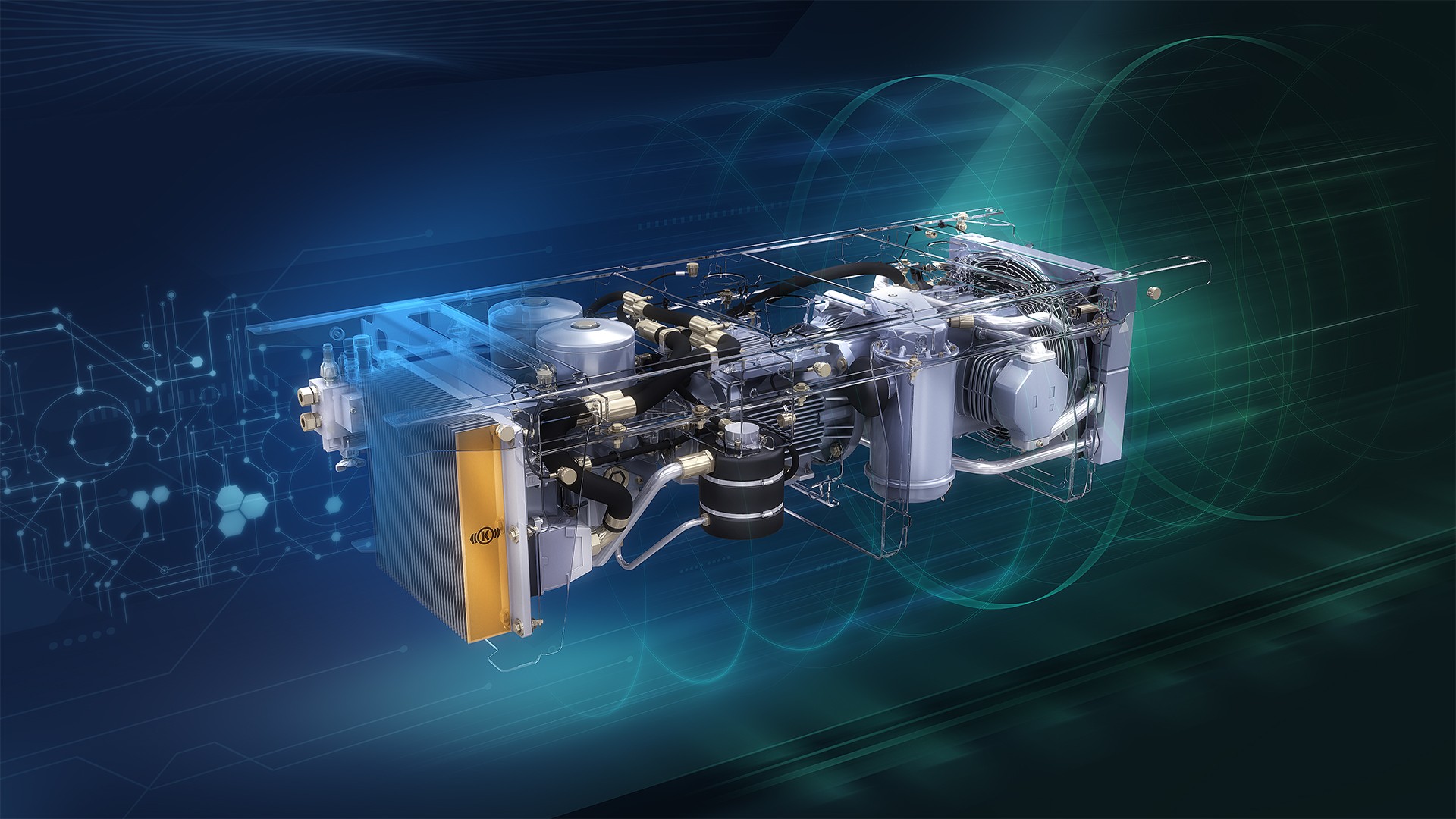
Now the new air supply system, dubbed “AirSupply Smart” by Knorr-Bremse, is changing compressor behavior out of all recognition with its climate-friendly, eco-compatible management of energy and noise emissions [Fig. 1]. The secret is a frequency inverter developed especially for the rail industry and equipped with a condition-monitoring function. Not only does it convert the vehicle-specific output voltage and frequency; it also acts as the air supply system’s main drive and control unit.
“Silent mode” reduces trackside noise
In especially noise-sensitive environments – such as train stations, or sidings where trains are parked overnight near residential areas – the frequency inverter is capable of reducing the compressor’s speed, simultaneously lowering its noise output. The impact of this silent mode on nearby residents’ wellbeing is significant, as shown by the example of a standard compressor (the VV120-T): Smart adjustment of the compressor’s operating speed reduces its noise output by up to 75 percent, actively helping rail operators to comply with increasingly stringent noise regulations.
This ability to reduce operating speeds also has significant benefits for the system as a whole. It resolves a number of previously intractable design goals involving the compressor’s delivery rates, soundproofing, cooling airflow and condensate separator: A system that produces less noise needs less soundproofing encapsulation. And once less soundproofing is required, it becomes possible to simplify the cooling concept. This in turn reduces the air supply system’s complexity – and substantially lowers its weight.
Other benefits of situational compressor control
But the speed control function also works the other way round – it can be used to increase compressor output. In situations where the demand for compressed air is especially high, “boost mode” is invaluable for stabilizing train operation.
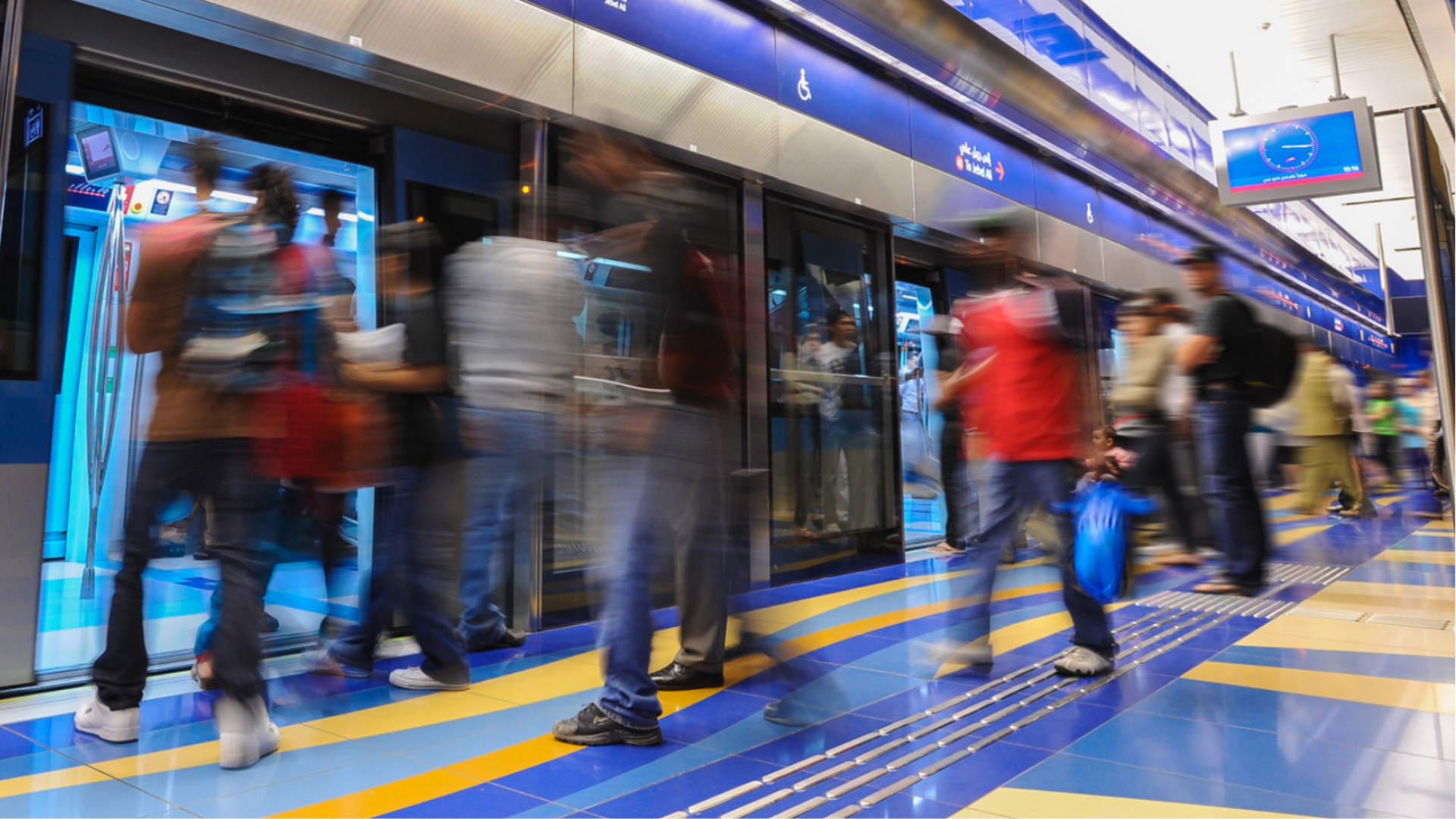
On the one hand, this upwardly adjustable output reduces train preparation times, so vehicles are ready for operation more quickly. On the other, it can counteract the risk that traction power will be cut off if, for example, large numbers of passengers simultaneously disembark at a central transit hub, causing the pneumatic suspension to adjust in response, so that the compressed-air pressure threatens to fall below a critical threshold [Fig. 2]. And there is another benefit, not to be underestimated: Because compressor output can be boosted, it becomes feasible to install smaller compressors (“downsizing”). This in turn reduces weight, space requirements and noise emissions.
A similar consideration applies to many electrically powered vehicles which, in addition to the main air compressor, are equipped with a battery-powered auxiliary compressor. The latter is installed to ensure that pantographs can be raised up to contact the overhead line even if the compressed-air reservoirs are empty.
“Pantograph mode” makes the entire auxiliary compressor assembly redundant and eliminates all the associated issues of additional space, complex integration, extra weight and maintenance costs. Instead, the frequency inverter converts direct current from the vehicle battery into three-phase (AC) current and uses a reduced power-on current to run the compressor at a lower speed. Because less power is required, it becomes possible to run the “main” air compressor from the vehicle’s 110-volt battery for short periods of time without overloading the battery. As soon as the pantograph engages with the overhead line, the controller switches back into conventional charging mode.
Smart control system is not the only way to avoid noise
Innovative development methods have made it possible to reduce the structure-borne noise of compressor components such as valves, pistons, bearings and filters, further reducing overall noise pollution. This adds even more value, especially in “silent mode”, when additional sounds become disproportionately audible.
To identify acoustic emissions and optimize their sources, the developers relied on a clever combination of different simulation techniques. These included modal analyses, harmonic analyses, transient FE simulations, flow and acoustic emission simulations. In the case of the standard compressor mentioned above, for example, it turned out that some of the critical noise was being emitted by a filter valve – a small component just four centimeters long, weighing just 20 grams. When agitated in operation, it acted like a tuning fork, radiating sound over the compressor’s surface. Using simulation-based hardware optimization, it was possible to reduce the filter valve’s acoustic emissions by up to 8 dB(A); for comparison, the human ear perceives a reduction of 10 dB(A) as a halving of the volume. A similar technique was used to optimize the design of other noise-influencing components such as fan cowlings and piston rings.
In short, this integrated approach, combining situational compressor control with innovative development methods, has turned AirSupply Smart into a trailblazing example of how to sustainably reduce noise emissions from rail vehicles. The VV90-T variant, for example, is the quietest piston compressor without soundproofing encapsulation ever developed by Knorr-Bremse in this output range. Now it is helping to make rail – already the most eco-friendly mode of transportation – even greener.
Authors: Dr. Martin Schmid (Dr.-Ing.), Martin Schmid (Dipl.-Wirt.-Ing.)