
After traction systems, climate control systems are the most significant consumer of energy in rail vehicles: Up to 30 percent of the total energy consumed is used to maintain a pleasant, even temperature in passenger compartments and the driver’s cab. The potential for substantially reducing a rail vehicle’s ecological footprint by installing efficient HVAC systems is correspondingly high. Multiple technologies already exist for improving the energy efficiency of the systems themselves, and for reducing the amount of air required for heating and cooling purposes. While these technologies do increase the initial acquisition cost, they generally pay for themselves in just two or three years. A simple shift of perspective swiftly highlights their potential for reducing a rail vehicle’s overall lifecycle costs.
HVAC systems – a powerful lever for downsizing eco-footprints
For developers seeking to cut down rail vehicles’ energy consumption, the top priority is to make the rail vehicle drive technology as efficient as possible. Streetcars, trams and metros in particular consume significant amounts of energy because they have to make so many stops over relatively short distances. To accelerate a 35-ton streetcar from standstill to a speed of 60 km/h, the notional energy consumption is around 1.36 kWh. To this should be added the energy lost due to friction, gradients, air resistance and the relative efficiency of the traction system.
Starting with this quick calculation helps to put the importance of the climate control system as the train’s second most significant energy consumer into perspective. In long-distance trains, HVAC systems typically account for between 15 and 20 percent of total energy consumption; in regional trains, this figure may be as high as 40 percent [1]. The potential for improving the overall ecological footprint is correspondingly high.
Design of HVAC systems
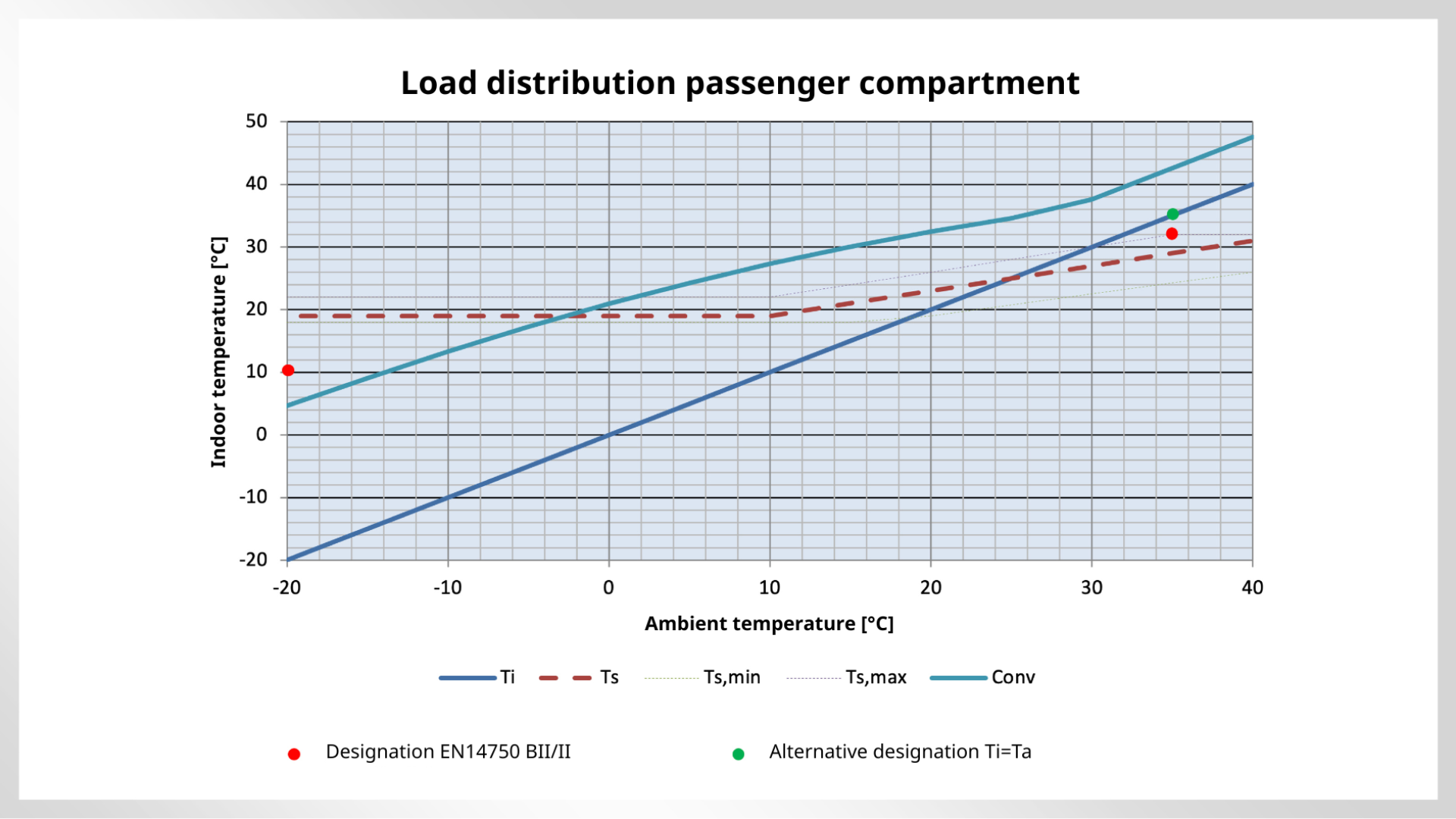
When planning suburban and regional transit systems for towns and cities, designing HVAC systems that comply with EN 14750-1/EN 14813-1 is one of the more complex requirements. Designers must reconcile vehicle-specific data such as dimensions, window areas, material properties and air duct systems with equally specific operating data such as ambient conditions, traveling speed, passenger capacity, ratio of supply air to outside air, additional loads and – last but not least – local expectations of passenger comfort. Other variables include, for example, the intensity and angles of incidence of solar irradiation, absorption and transmittance factors, as well as the amount of heat generated by humans and electrical enclosures.
These computations provide vehicle manufacturers with the HVAC system’s “design point”, corresponding to the maximum heat energy which must be supplied or discharged in order to maintain the requisite air temperature and air quality within the vehicle.
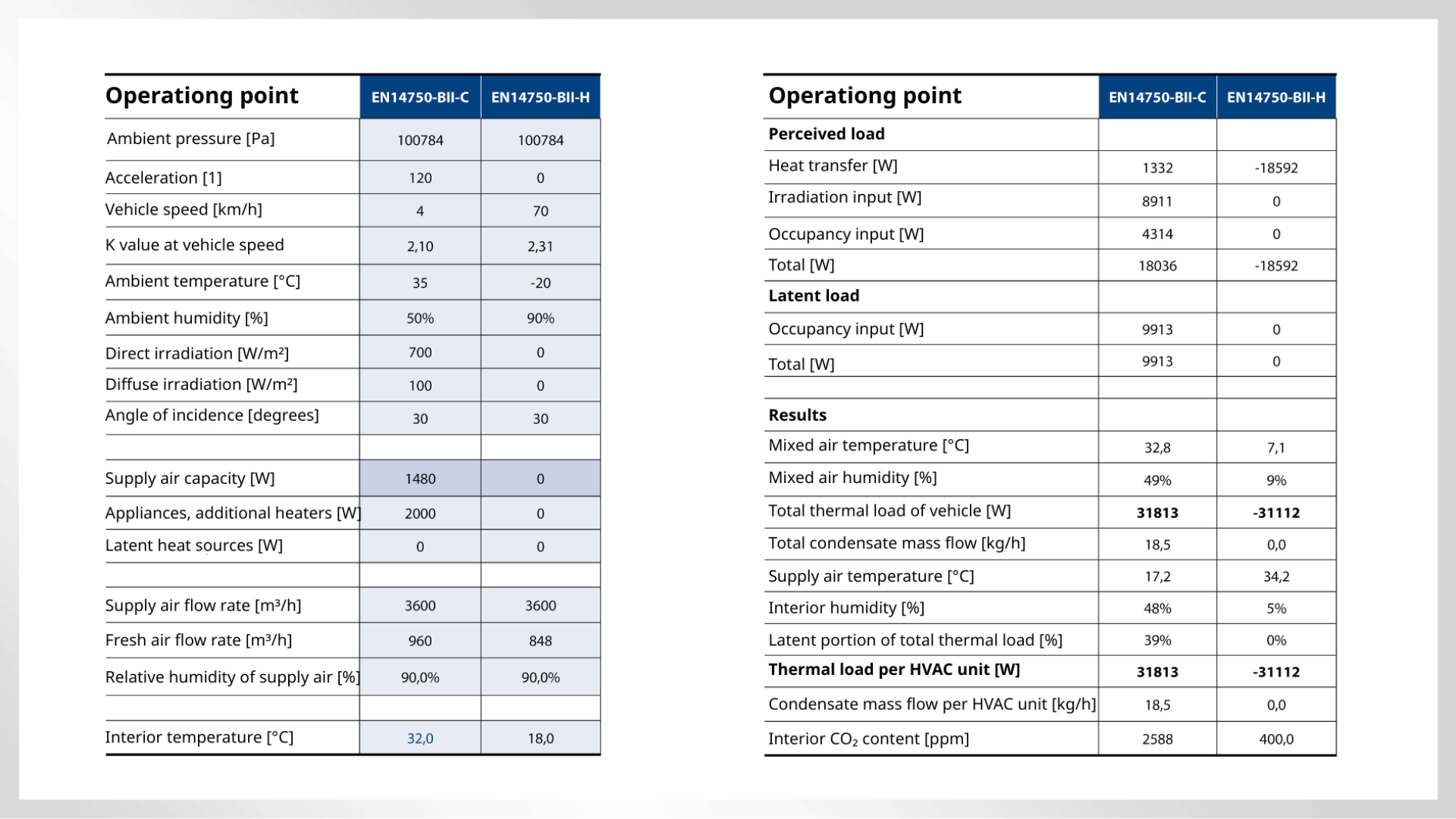
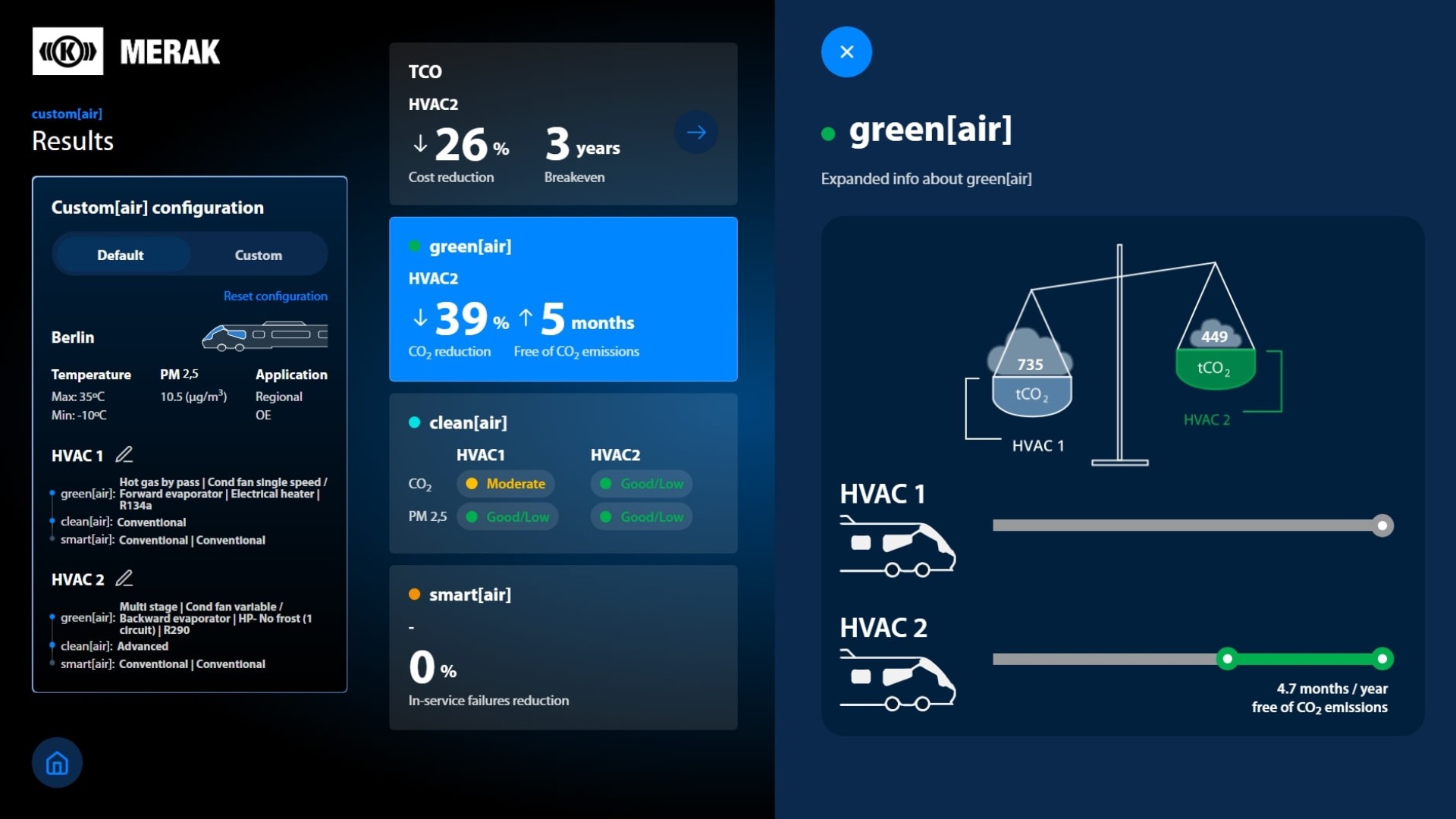
When designing HVAC systems, Knorr-Bremse company Merak relies, among other things, on a tool for predicting future energy consumption. Calculations include, first, the technical specifications of the various system components, and second, validated operating data and ratings from previous projects. By comparing the specific system requirements with the KPIs from these projects, the team is able to quickly identify suitable efficiency-boosting design solutions and incorporate them into their planning.
Reducing heating and cooling air requirements, increasing HVAC energy efficiency
There are two major in-vehicle factors which developers can adjust to reduce energy consumption. The first is to decrease the amount of heating and cooling air required by the vehicle; the second, to improve the energy efficiency of its HVAC systems. It is important to be aware of the complex interactions between seasons of the year and the vehicle’s operating location, as well as local passengers’ expectations of comfort.
The following approaches can be used to cut down the demand for heating/cooling air:
- Take full advantage of the laws of physics governing airflow: Cold air sinks (down, toward the floor); warm air rises. To use energy efficiently, it therefore makes sense to provide cooling via the ceiling and heating via the floor, using – for example – dedicated air ducts.
- Recirculate air to efficiently precondition fresh air: Instead of exchanging exclusively (warm) air inside the vehicle for (cold) fresh air from the surrounding environment, some of the warm air can be combined and recirculated with the incoming fresh air. The increased volumetric airflow enhances atmospheric composition inside the vehicle, as well as the efficiency of the HVAC system’s heat exchangers.
- Insulated glazing: Insulated glazing consists of windows with multiple layered panes of glass. Optionally, the gaps between them can be filled with an inert gas characterized by exceptionally low thermal conductivity. This reduces winter heating requirements, but apart from increasing vehicle weight, also means higher purchase costs.
- Solar control glazing: Solar control glazing combines a low total energy transmittance (g-value) of warming infrared solar energy with high light transmittance (t-value). The longer the summers and the milder the winters, the more cost-effective it is to invest in this type of glazing.
- Thermal insulation: A thermally insulated vehicle body reduces heating requirements in winter and cooling requirements in summer. However, it also increases the vehicle’s weight. Systematic thermal insulation of the entire air duct system – including the HVAC system’s air treatment zone, air ducts and passenger compartment outlets – also enhances efficiency.
- Vehicle color: Darker colors absorb sunlight better than light colors. This also affects energy efficiency: in above-ground traffic, a darker vehicle color will cut heating requirements in winter but increase cooling requirements in summer.
Merak uses the following approaches to make HVAC systems more energy-efficient:
- Coefficient of performance and energy efficiency ratio: Developers can significantly improve the ratio of an HVAC system’s cooling (EER) or heating (COP) performance to the amount of electrical energy used in the cooling circuit by combining electronic high-pressure controllers with a sophisticated heat exchanger configuration.
- “Free Cooling”: This term describes the load-dependent increase in the volumetric flow of fresh air while the latter’s temperature is lower than the target supply air temperature. This use case is typical of the transitional period during which vehicle utilization is high and solar irradiation is low. Experience shows that this approach pays for itself in less than three years.
- Demand-driven control of outside air: Conventional HVAC systems operate in just two modes: “on” or “off”. However, HVAC operation can also be directly linked to the number of passengers in the railcar. In this case, a CO2 sensor continuously measures air quality so that the control system can automatically adjust operational parameters if certain limits are not reached or exceeded. Depending on the external air temperature, it is possible to reduce energy consumption, for example, by between 10 and 40 percent at 75-percent passenger occupancy compared with an unregulated fresh air supply (as defined in EN14750). At 33-percent occupancy, the reduction in energy consumption ranges from just under 25 percent to 55 percent. A control system of this type can be expected to pay for itself in less than three years.
- Regenerative heating: By prioritizing heating during braking maneuvers, any energy that cannot be recuperated can instead be used to run the HVAC system. In return for slight fluctuations in the supply air temperature, energy costs can be significantly reduced thanks to this free supply of heat. An integrated energy storage system would further amplify this effect. On the other hand, it would also increase vehicle weight.
- Thermal management of waste heat from motors or engines: Traction heat generated by the vehicle’s motors or engine can be used for heating purposes. Combined with a heat pump, this approach can even make it unnecessary to install electric heating systems in the vehicle. While this “free” heat supply requires a more expensive water-cooled traction system, this is offset by significantly lower energy costs: Depending on the route profile, the available average waste heat output is around 20 kW per bogie, at least 25 percent of which can be used for heating. A (small) electric heater or heat pump is only required for preheating purposes while the vehicle is stationary.
- Frequency-controlled heat pump: In return for slightly higher cooling circuit maintenance costs, the use of frequency-controlled heat pumps can achieve high levels of efficiency, especially in moderate heating conditions (> ‑5°C): By reversing the existing cooling circuit, additional heat is extracted from the already cool ambient environment and fed into the passenger compartment. However, if the atmosphere outside tends to be humid, this option should be weighed against the drawbacks of icing on the external heat exchanger.
Alternative refrigerants
The fact that the climate impact of HVAC systems results from a combination of their energy consumption with the global warming potential (GWP) of the refrigerants they use is already well established. The industry is currently in the midst of a transition from HFC-based refrigerants (GWP: 1000 to 2000) to low-GWP refrigerants based on hydrofluoroolefins (HFOs) – the next step will be the transition to natural refrigerants. While the necessary cooling capacity can be achieved relatively easily using R290/propane (within certain containment and weight limits), the latter’s high flammability poses a major challenge in terms of manufacturing, testing, operating and maintaining the systems over their entire lifecycle, as well as safely avoiding any accidents (EN378).
The GWP of R744/carbon dioxide (CO2) is even lower (GWP: 1). Because R744/CO2 is neither explosive nor flammable, its use in rail vehicle operations is relatively straightforward. Providing the necessary cooling capacity within the specified containment and weight parameters while keeping costs competitive over the entire system lifecycle is no longer a problem, especially for applications in temperate climates. Again, it is important to comply with EN378 requirements, but in this case, the only risk is of suffocation.
Dosto 94/Merak field trials vehicle
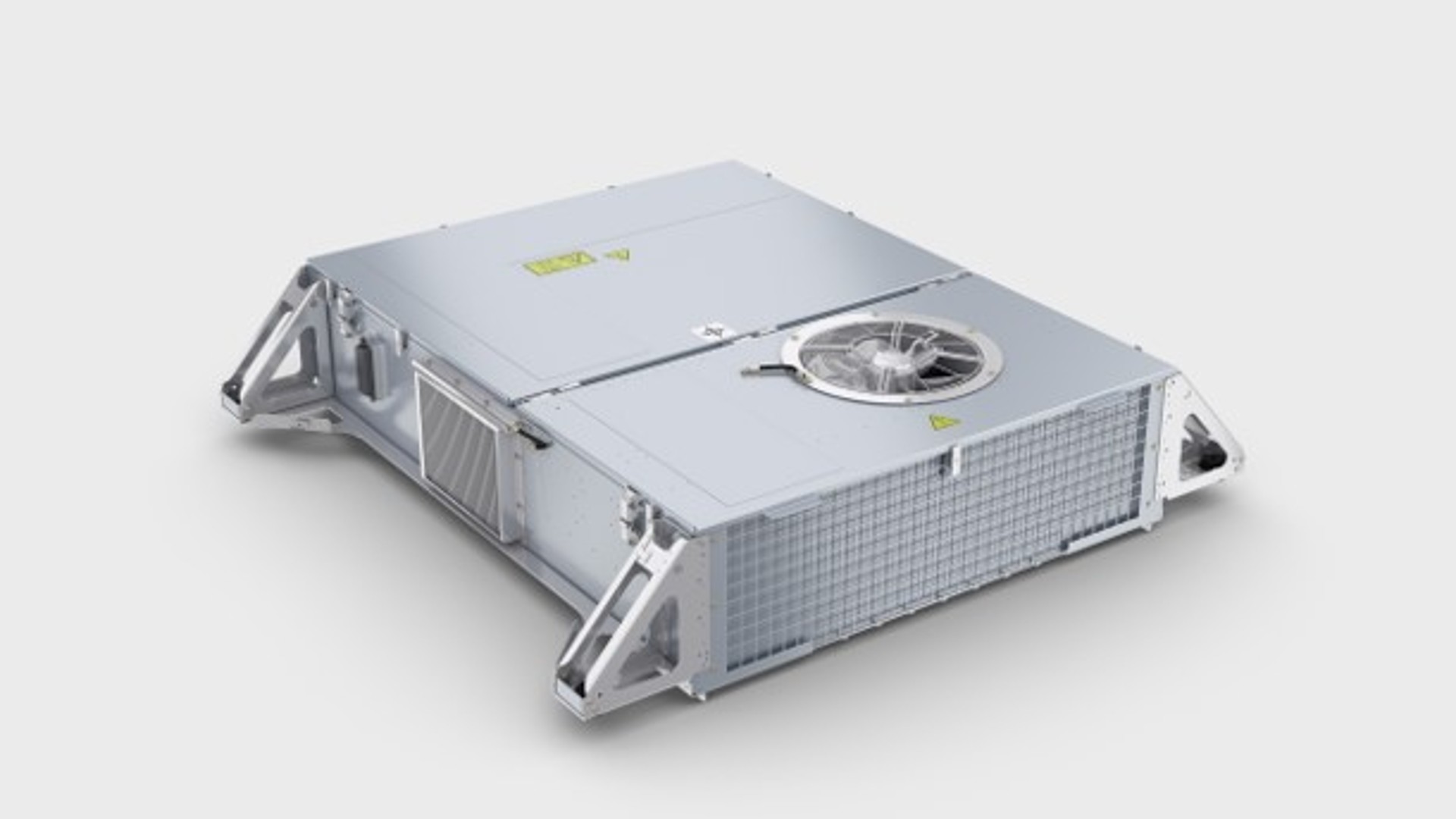
As part of a large-scale field trial, DB RegioNetz Verkehrs GmbH Südostbayernbahn and Merak tested two converted HKL752-DB94 systems with R744/CO2 refrigerant and a comprehensive suite of sensors. The trial was carried out under the auspices of the EU Shift2Rail program.
- Cooling capacity: 26 kW
- Heat pump heating capacity: 20 kW
- Supply air volumetric flow: 3,600 m³/h
- Dimensions: 1510 x 1790 x 985 mm
- Weight: 620 kg (comparable to the weight of a system powered by synthetic refrigerants)
- Power supply: 3 AC 400 V 50 Hz / DC 24 V
Over the entire test period, which lasted almost two years, the systems ran without any component failures, thereby confirming the design’s operational reliability. When operating in cool weather, in low outdoor temperatures (below 20°C), the system’s EER (energy efficiency ratio; ratio of cooling performance to electrical energy consumed by mechanical heat pumps) was around 60 percent higher than that of the reference system (R134a). As expected, the EER dropped below that of the reference system at higher outdoor temperatures (>28°C). Based in no small part on the results of this field trial, the series production units are now in service aboard passenger trains on multiple rail networks.
Outlook
If climate control systems are to improve not just passenger comfort but also rail vehicles’ eco-footprint, an important shift in perspective is required – away from the initial purchase price to focus instead on the total lifecycle costs of the various systems involved. In addition, the energy efficiency of HVAC systems should be prioritized over the increasing tendency to reduce the available installation space in vehicles. Greater awareness of the big picture is essential.
On the one hand, the likelihood that the proportion of battery-powered rail vehicles will grow requires that all thermal energy on trains should be managed as efficiently as possible. On the other hand, vehicle cost and weight – not to mention acceptable range – must remain economically viable.
This means that smart thermal management will become an even more important aspect of vehicle operation in the future – by implementing, for example, integrated control of HVAC and entrance systems throughout the train. Typically, an integrated control system would be able to reduce the output of the train’s HVAC systems whenever the doors are open, so that air which has just been heated or cooled actually stays inside the train.
Due to the lengthy service lives of rail vehicles, it should be possible to further reduce lifecycle costs by a significant margin – not only when the vehicle is first fitted out, but also over its operational lifetime. This would apply in particular to major maintenance projects or when replacing refrigerants.
Reference sources
[1] M. Jürgen Ernst: EU Shift2Rail Project FINE2 Del. D2.2 Energy Baseline Update, 2023